

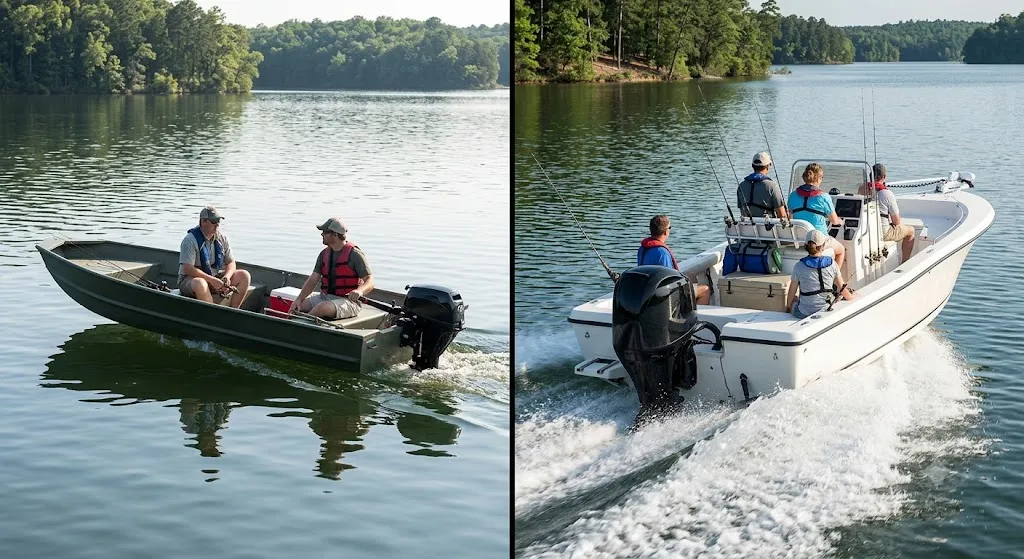
Boat weight has a major effect on how an outboard performs, yet it is often overlooked during engine selection. The hull itself is only part of the equation. Fuel, passengers, batteries, coolers, fishing gear, safety equipment, and added accessories can all change the total operating weight.
A motor that feels adequate on a lightly loaded boat may behave very differently once the vessel is prepared for a full day on the water. Looking at realistic weight helps owners choose power more sensibly and avoid disappointing performance later.
Dry Weight Is Only the Beginning
Boat specifications often list a dry weight, but that figure does not represent the complete setup used on the water. It may exclude fuel, passengers, equipment, and sometimes even the motor.
That means buyers should avoid making engine decisions from dry weight alone. A better estimate includes the gear and people normally carried during a typical trip.
Fuel Adds More Than Expected
A full fuel tank can add significant weight, especially on boats with larger capacities. This extra load sits in a fixed part of the vessel and can influence balance as well as performance.
Owners who regularly begin trips with a full tank should include that weight in their planning. It gives a more accurate picture of how the boat will accelerate and cruise.
Passenger Load Changes Performance
The number of people on board can noticeably affect how quickly a boat gets on plane. Passenger placement also influences balance from side to side and from bow to stern.
A setup that works perfectly with two people may feel slower with six. Thinking about normal passenger numbers helps avoid choosing an engine based on unrealistically light conditions.
Shopping With Real Load in Mind
When reviewing Outboard Motors for Sale, it is useful to compare engine options against the boat’s expected operating weight rather than just its advertised hull figure.
This creates a more practical shortlist. The aim is to find enough usable power for normal conditions without exceeding the boat manufacturer’s approved limits.
Fishing Gear Can Add Up
Fishing boats often carry more weight than owners first realize. Tackle boxes, live wells, coolers, trolling batteries, anchors, and electronics all contribute to the total.
Individually, these items may seem minor, but together they can make a noticeable difference. Heavy fishing setups deserve to be included when assessing engine needs.
Accessories Affect Balance Too
Modern boats may have extra batteries, audio equipment, larger displays, power poles, storage systems, and other accessories. These additions can change both total weight and its distribution.
Too much weight near the stern may affect planing and steering feel. Positioning equipment carefully can help the boat use engine power more effectively.
Power Should Match the Workload
Horsepower should be considered in relation to what the engine is being asked to move. A heavier operating load may require more effort to reach a comfortable cruising speed.
That does not mean choosing the maximum rating automatically. The best setup stays within approved limits while providing enough power for realistic everyday conditions.
Compare Models on More Than Power
Two engines with similar horsepower can differ in weight, controls, and other specifications. Those differences may matter when the boat is already carrying a substantial load.
A buyer looking at a Mercury Outboard should therefore consider engine weight alongside horsepower. The lighter or heavier option is not automatically better; compatibility with the vessel matters most.
Test Under Normal Conditions
Performance testing should ideally reflect how the boat is actually used. An empty boat on calm water does not provide the full picture.
Testing with normal gear and a realistic passenger load gives a better sense of acceleration, planing time, steering response, and cruising comfort.
Weight Distribution Can Be Adjusted
Not every performance problem requires a different engine. Sometimes moving heavy items can improve how the boat sits and responds.
Batteries, coolers, and portable equipment may be repositioned to improve balance. Small adjustments can sometimes make the existing setup feel more controlled.
Keep Future Additions in Mind
Boat owners often add equipment over time. Electronics, storage upgrades, larger batteries, and fishing accessories can gradually increase operating weight.
Allowing for realistic future additions can make the original engine choice more practical. It is better to think ahead than discover later that the boat has become noticeably heavier.
Conclusion
Boat weight affects acceleration, planing, fuel use, steering, and cruising performance. Looking only at the hull’s dry weight can lead to an unrealistic engine choice.
A better approach is to consider fuel, passengers, equipment, accessories, and normal trip conditions together. When total operating weight is understood properly, it becomes easier to select an outboard that feels balanced, capable, and suitable for the way the boat is genuinely used.